Roofing Services in Myrtle Beach, SC
Local Roofing Expertise
From oceanfront condos near Cherry Grove Pier to businesses along the Intracoastal Waterway, a roofing contractor in Myrtle Beach, SC faces challenges most inland roofers never encounter. Salt air corrodes fasteners, coastal storms demand wind-resistant designs, and permits in both Myrtle Beach and North Myrtle Beach vary by location. This page covers what you need to know about roof repairs, replacements, inspections, and coatings—plus local details that matter for your property.
Why Local Climate Matters to Your Roof
Myrtle Beach sits on South Carolina's Grand Strand, where your roof battles salt air from the Atlantic, humidity that hovers near 70–80% year-round, and hurricane-force winds June through November. Myrtle Beach roofs face unique coastal challenges including hurricane-force winds, salt air corrosion, intense UV exposure, high humidity, and heavy rainfall—conditions that cause roofs to age 25-30% faster than inland areas.
In neighborhoods like Carolina Forest, Socastee, or the Market Common, inland roofs face slightly less salt exposure but still endure intense summer heat and seasonal storms. Oceanfront properties near Grande Dunes or Pawleys Island experience accelerated deterioration from salt spray alone.
Salt Air and Corrosion
Salt spray and air can corrode metal components, loosen shingles, and shorten the lifespan of your roof. Constant moisture promotes mold and mildew growth, which can deteriorate your roof's underlayment and lead to leaks. Metal flashing, vents, and fasteners face the fastest wear in beachfront zones.
Wind and Storm Pressure
Coastal areas are prone to high winds, which can lift and tear shingles off the roof. Myrtle Beach residents have experienced many hurricanes throughout the years, and hurricane season lasts from early June through late November. Loose shingles or improperly fastened panels fail under pressure, exposing decking to water damage.
How Roofing Projects Work
Whether you need emergency repair or planned replacement, a structured approach protects your home and keeps costs fair.
1Free Inspection
Professional roofer examines shingles, flashing, vents, and attic ventilation to diagnose leaks or damage. No cost, no obligation.
2Assessment & Budget
Contractor explains findings with photos, discusses repair versus replacement options, and works with your insurance claim if applicable.
3Permit Handling
In Myrtle Beach and North Myrtle Beach, roofing permits are required. Your contractor manages paperwork with the city's Construction Services Department.
4Prep & Protection
Crew removes old roofing (if replacement), inspects deck for rot or water damage, and installs underlayment and drip edges before new material.
5Installation
Shingles, metal panels, tile, or coatings are applied per manufacturer and coastal building code standards. Flashing and vents secured to resist wind uplift.
6Inspection & Warranty
City inspector verifies permit compliance. You receive documentation and warranty details covering materials and labor.
You'll always know what's happening next—and when.
Our Roofing Services
Complete Roof Replacement
When shingles are missing, decking is compromised, or the roof has reached the end of its coastal lifespan, replacement is the lasting solution. Choice of materials—architectural shingles, standing seam metal, tile, or slate—depends on your location (oceanfront or inland), budget, and wind ratings.
Metal roofing dominates in oceanfront neighborhoods near Grande Dunes due to superior salt resistance and 50+ year lifespan. Inland areas like Carolina Forest often favor architectural shingles for affordability.
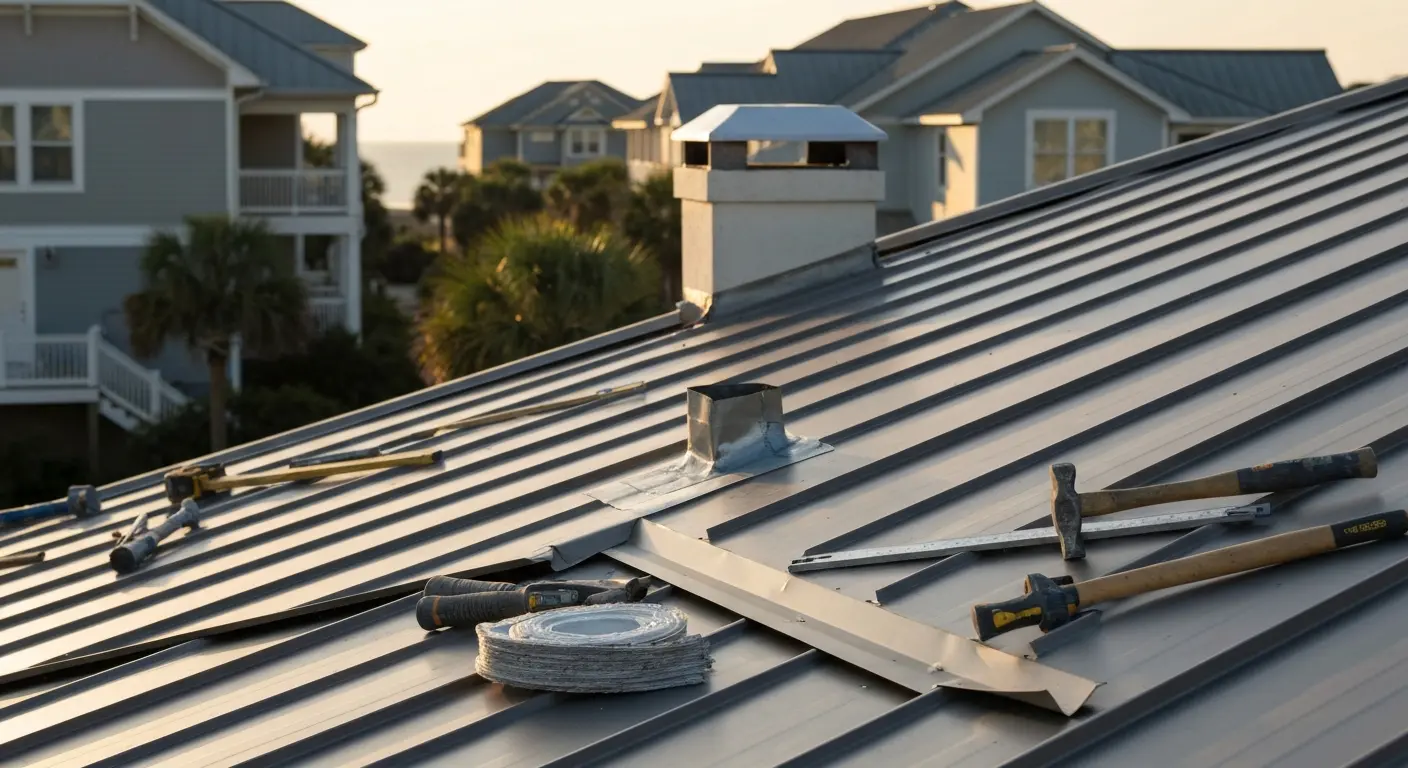
New metal roof installation in oceanfront neighborhood, Myrtle Beach
Professional Roof Repair
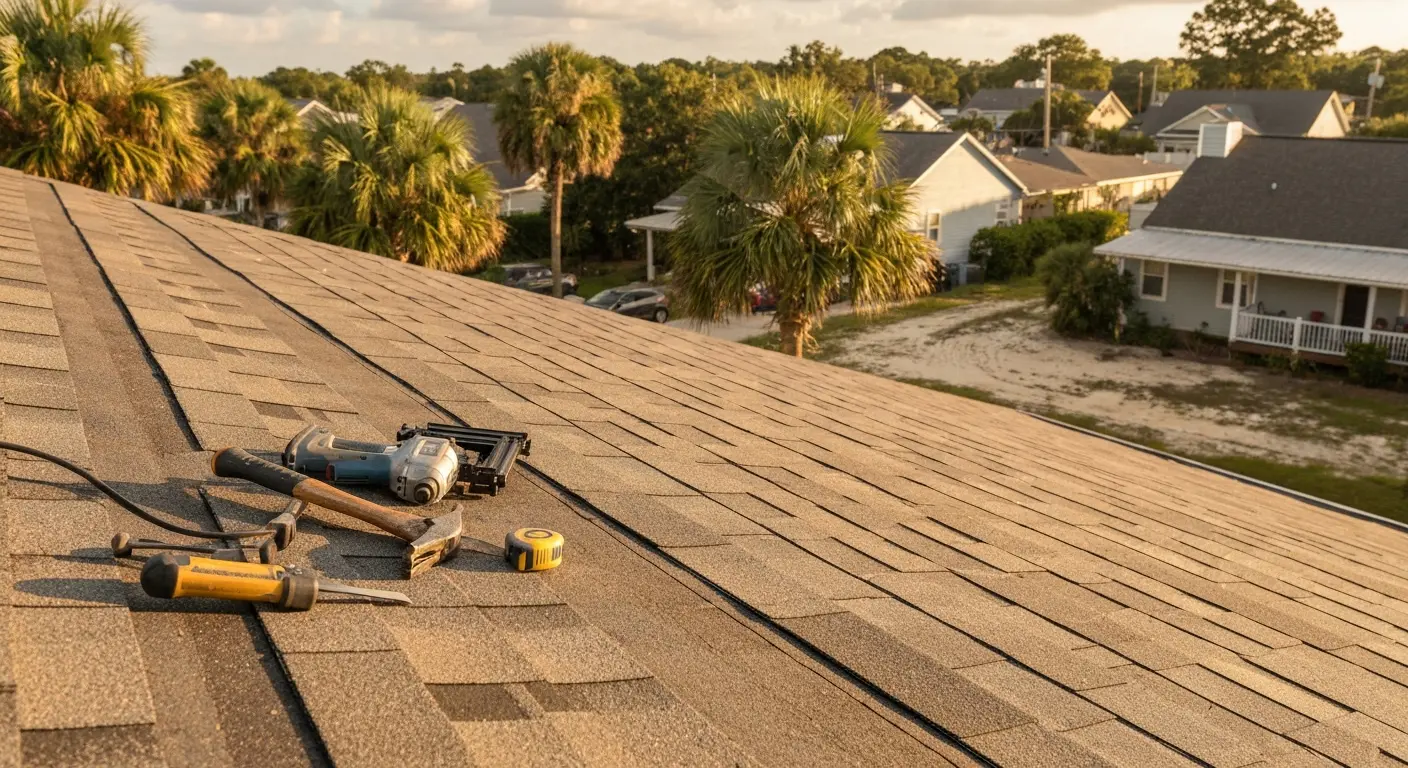
Shingle replacement after storm damage, Socastee area
Missing shingles, active leaks, or storm damage require prompt attention. In Myrtle Beach's storm season, wind often lifts shingles—allowing water to seep into decking and attic framing. A repair catches the problem before rot spreads.
Oceanfront properties near Pawleys Island benefit from repairs that focus on salt-corroded flashing and fasteners, which fail fastest in coastal air.
Preventive Roof Maintenance
Seasonal inspections prevent emergency repairs. In Myrtle Beach, spring and fall maintenance—clearing gutters, checking flashing, and cleaning debris—extends roof life by 5–10 years. Oceanfront homes require more frequent visits due to salt accumulation.
Roof Coating and Restoration
Reflective coatings reduce cooling costs, protect against UV damage, and extend the life of flat roofs (common on Market Common commercial properties). Applied to existing roofs, coatings delay full replacement for 5–10 years in coastal conditions.
Why Coastal Roofing Requires Local Expertise
A contractor familiar with Myrtle Beach's coastal environment understands which materials resist salt corrosion, how wind codes apply in beachfront zones, and which permit processes differ between the city and neighboring North Myrtle Beach.
Material Selection Matters: While a standard asphalt roof might last 20–30 years in a mild climate, the salt air, humidity, high winds, tropical storms, and hurricane conditions in Myrtle Beach can cut that roof lifespan dramatically. Standing seam metal roofs—especially aluminum or galvanized steel with a Kynar coating—perform exceptionally well in salt-heavy environments.
In neighborhoods like Arcadian Shores or the Dunes, homes overlook multiple building codes. Some properties sit in flood zones requiring specific underlayment standards. Permit requirements vary slightly between city limits and unincorporated Horry County areas, and wind uplift ratings are stricter near the coast.
A local contractor also knows that oceanfront roofs age 25–30% faster than inland properties—meaning a roof rated for 20 years inland may need replacement in 12–15 years in Myrtle Beach's salt-laden air.
Serving Myrtle Beach and Surrounding Areas
Trusted roofing expertise across the Grand Strand and beyond.
We serve oceanfront properties near Cherry Grove Pier and Barefoot Landing, inland communities in Carolina Forest and Socastee, gated neighborhoods like Prestwick, and historic areas such as Pawleys Island. North Myrtle Beach properties, including Ocean Drive and Windy Hill, receive the same expertise for salt-air protection and wind-resistant installation.
Roofing work is performed throughout Horry County, including Conway, Surfside Beach, and Murrells Inlet. Whether your roof overlooks the Intracoastal Waterway or sits inland near U.S. 501, local knowledge of materials, climate, and codes ensures a roof built to last.
Emergency Service
Roof leaks don't follow business hours. Storm damage, missing shingles, and fallen debris are addressed around the clock. Call for same-day inspection and emergency tarping to prevent water intrusion until permanent repairs begin.
Frequently Asked Questions
How do I know if my roof needs repair or replacement?
Missing or damaged shingles, visible sagging, active leaks, and granule-filled gutters signal repair. If your roof is over 15 years old in Myrtle Beach's climate, a professional inspection determines whether repair or replacement makes sense. A free assessment shows exactly what's happening.
Do I need a permit for roofing work in Myrtle Beach?
Yes. Myrtle Beach and North Myrtle Beach require building permits for any roofing replacement or major repair. Your contractor handles all paperwork with the city's Construction Services Department; no action needed on your part.
How does salt air affect roofing material choices?
Salt corrodes standard metal fasteners and flashing. Oceanfront properties benefit from standing seam metal, tile, or architectural shingles with galvanized or stainless steel fasteners. Inland areas (Carolina Forest, Socastee) can use standard materials but should still prioritize salt-resistant fastening.
What happens during a professional roof inspection?
A thorough inspection covers exterior shingles, flashing, vents, and attic ventilation. The roofer documents findings with photos, checks for moisture or rot, estimates remaining life, and provides written recommendations. Free inspections carry no obligation—you see the problems before deciding on next steps.
How often should I maintain my roof in Myrtle Beach's climate?
Spring and fall maintenance—clearing gutters, inspecting flashing, removing debris—keeps your roof healthy. Oceanfront properties benefit from more frequent checks (every 3–6 months) due to salt accumulation. Professional maintenance extends roof life by 5–10 years in coastal conditions.
Can my insurance help cover roofing costs after a storm?
Yes. Storm damage is often covered. Your contractor can help document the damage with photos, file claims paperwork, and work directly with your insurance company. Free estimates make it easy to compare your deductible against repair or replacement costs.
Local Roofing Expertise
From oceanfront condos near Cherry Grove Pier to businesses along the Intracoastal Waterway, a roofing contractor in Myrtle Beach, SC faces challenges most inland roofers never encounter. Salt air corrodes fasteners, coastal storms demand wind-resistant designs, and permits in both Myrtle Beach and North Myrtle Beach vary by location. This page covers what you need to know about roof repairs, replacements, inspections, and coatings—plus local details that matter for your property.
Why Local Climate Matters to Your Roof
Myrtle Beach sits on South Carolina's Grand Strand, where your roof battles salt air from the Atlantic, humidity that hovers near 70–80% year-round, and hurricane-force winds June through November. Myrtle Beach roofs face unique coastal challenges including hurricane-force winds, salt air corrosion, intense UV exposure, high humidity, and heavy rainfall—conditions that cause roofs to age 25-30% faster than inland areas.
In neighborhoods like Carolina Forest, Socastee, or the Market Common, inland roofs face slightly less salt exposure but still endure intense summer heat and seasonal storms. Oceanfront properties near Grande Dunes or Pawleys Island experience accelerated deterioration from salt spray alone.
Salt Air and Corrosion
Salt spray and air can corrode metal components, loosen shingles, and shorten the lifespan of your roof. Constant moisture promotes mold and mildew growth, which can deteriorate your roof's underlayment and lead to leaks. Metal flashing, vents, and fasteners face the fastest wear in beachfront zones.
Wind and Storm Pressure
Coastal areas are prone to high winds, which can lift and tear shingles off the roof. Myrtle Beach residents have experienced many hurricanes throughout the years, and hurricane season lasts from early June through late November. Loose shingles or improperly fastened panels fail under pressure, exposing decking to water damage.
How Roofing Projects Work
Whether you need emergency repair or planned replacement, a structured approach protects your home and keeps costs fair.
Free Inspection
Professional roofer examines shingles, flashing, vents, and attic ventilation to diagnose leaks or damage. No cost, no obligation.
Assessment & Budget
Contractor explains findings with photos, discusses repair versus replacement options, and works with your insurance claim if applicable.
Permit Handling
In Myrtle Beach and North Myrtle Beach, roofing permits are required. Your contractor manages paperwork with the city's Construction Services Department.
Prep & Protection
Crew removes old roofing (if replacement), inspects deck for rot or water damage, and installs underlayment and drip edges before new material.
Installation
Shingles, metal panels, tile, or coatings are applied per manufacturer and coastal building code standards. Flashing and vents secured to resist wind uplift.
Inspection & Warranty
City inspector verifies permit compliance. You receive documentation and warranty details covering materials and labor.
You'll always know what's happening next—and when.
Our Roofing Services
Complete Roof Replacement
When shingles are missing, decking is compromised, or the roof has reached the end of its coastal lifespan, replacement is the lasting solution. Choice of materials—architectural shingles, standing seam metal, tile, or slate—depends on your location (oceanfront or inland), budget, and wind ratings.
Metal roofing dominates in oceanfront neighborhoods near Grande Dunes due to superior salt resistance and 50+ year lifespan. Inland areas like Carolina Forest often favor architectural shingles for affordability.
New metal roof installation in oceanfront neighborhood, Myrtle Beach
Professional Roof Repair
Shingle replacement after storm damage, Socastee area
Missing shingles, active leaks, or storm damage require prompt attention. In Myrtle Beach's storm season, wind often lifts shingles—allowing water to seep into decking and attic framing. A repair catches the problem before rot spreads.
Oceanfront properties near Pawleys Island benefit from repairs that focus on salt-corroded flashing and fasteners, which fail fastest in coastal air.
Preventive Roof Maintenance
Seasonal inspections prevent emergency repairs. In Myrtle Beach, spring and fall maintenance—clearing gutters, checking flashing, and cleaning debris—extends roof life by 5–10 years. Oceanfront homes require more frequent visits due to salt accumulation.
Roof Coating and Restoration
Reflective coatings reduce cooling costs, protect against UV damage, and extend the life of flat roofs (common on Market Common commercial properties). Applied to existing roofs, coatings delay full replacement for 5–10 years in coastal conditions.
Why Coastal Roofing Requires Local Expertise
A contractor familiar with Myrtle Beach's coastal environment understands which materials resist salt corrosion, how wind codes apply in beachfront zones, and which permit processes differ between the city and neighboring North Myrtle Beach.
Material Selection Matters: While a standard asphalt roof might last 20–30 years in a mild climate, the salt air, humidity, high winds, tropical storms, and hurricane conditions in Myrtle Beach can cut that roof lifespan dramatically. Standing seam metal roofs—especially aluminum or galvanized steel with a Kynar coating—perform exceptionally well in salt-heavy environments.
In neighborhoods like Arcadian Shores or the Dunes, homes overlook multiple building codes. Some properties sit in flood zones requiring specific underlayment standards. Permit requirements vary slightly between city limits and unincorporated Horry County areas, and wind uplift ratings are stricter near the coast.
A local contractor also knows that oceanfront roofs age 25–30% faster than inland properties—meaning a roof rated for 20 years inland may need replacement in 12–15 years in Myrtle Beach's salt-laden air.
Serving Myrtle Beach and Surrounding Areas
Trusted roofing expertise across the Grand Strand and beyond.
We serve oceanfront properties near Cherry Grove Pier and Barefoot Landing, inland communities in Carolina Forest and Socastee, gated neighborhoods like Prestwick, and historic areas such as Pawleys Island. North Myrtle Beach properties, including Ocean Drive and Windy Hill, receive the same expertise for salt-air protection and wind-resistant installation.
Roofing work is performed throughout Horry County, including Conway, Surfside Beach, and Murrells Inlet. Whether your roof overlooks the Intracoastal Waterway or sits inland near U.S. 501, local knowledge of materials, climate, and codes ensures a roof built to last.
Emergency Service
Roof leaks don't follow business hours. Storm damage, missing shingles, and fallen debris are addressed around the clock. Call for same-day inspection and emergency tarping to prevent water intrusion until permanent repairs begin.
Frequently Asked Questions
How do I know if my roof needs repair or replacement?
Missing or damaged shingles, visible sagging, active leaks, and granule-filled gutters signal repair. If your roof is over 15 years old in Myrtle Beach's climate, a professional inspection determines whether repair or replacement makes sense. A free assessment shows exactly what's happening.
Do I need a permit for roofing work in Myrtle Beach?
Yes. Myrtle Beach and North Myrtle Beach require building permits for any roofing replacement or major repair. Your contractor handles all paperwork with the city's Construction Services Department; no action needed on your part.
How does salt air affect roofing material choices?
Salt corrodes standard metal fasteners and flashing. Oceanfront properties benefit from standing seam metal, tile, or architectural shingles with galvanized or stainless steel fasteners. Inland areas (Carolina Forest, Socastee) can use standard materials but should still prioritize salt-resistant fastening.
What happens during a professional roof inspection?
A thorough inspection covers exterior shingles, flashing, vents, and attic ventilation. The roofer documents findings with photos, checks for moisture or rot, estimates remaining life, and provides written recommendations. Free inspections carry no obligation—you see the problems before deciding on next steps.
How often should I maintain my roof in Myrtle Beach's climate?
Spring and fall maintenance—clearing gutters, inspecting flashing, removing debris—keeps your roof healthy. Oceanfront properties benefit from more frequent checks (every 3–6 months) due to salt accumulation. Professional maintenance extends roof life by 5–10 years in coastal conditions.
Can my insurance help cover roofing costs after a storm?
Yes. Storm damage is often covered. Your contractor can help document the damage with photos, file claims paperwork, and work directly with your insurance company. Free estimates make it easy to compare your deductible against repair or replacement costs.
proudly serving these areas
North Carolina
Tennessee
Virginia
Georgia
West Virginia
Kentucky
Alabama
Mississippi
Schedule Your free roof inspection today!
QUICK LINKS
our services
service areas
operating HOURS
Mon: 8:00 am - 5:00 pm
Tue: 8:00 am - 5:00 pm
Wed: 8:00 am - 5:00 pm
Thu: 8:00 am - 5:00 pm
Fri: 8:00 am - 5:00 pm
Sat: Closed - Closed
Sun: Closed - Closed